


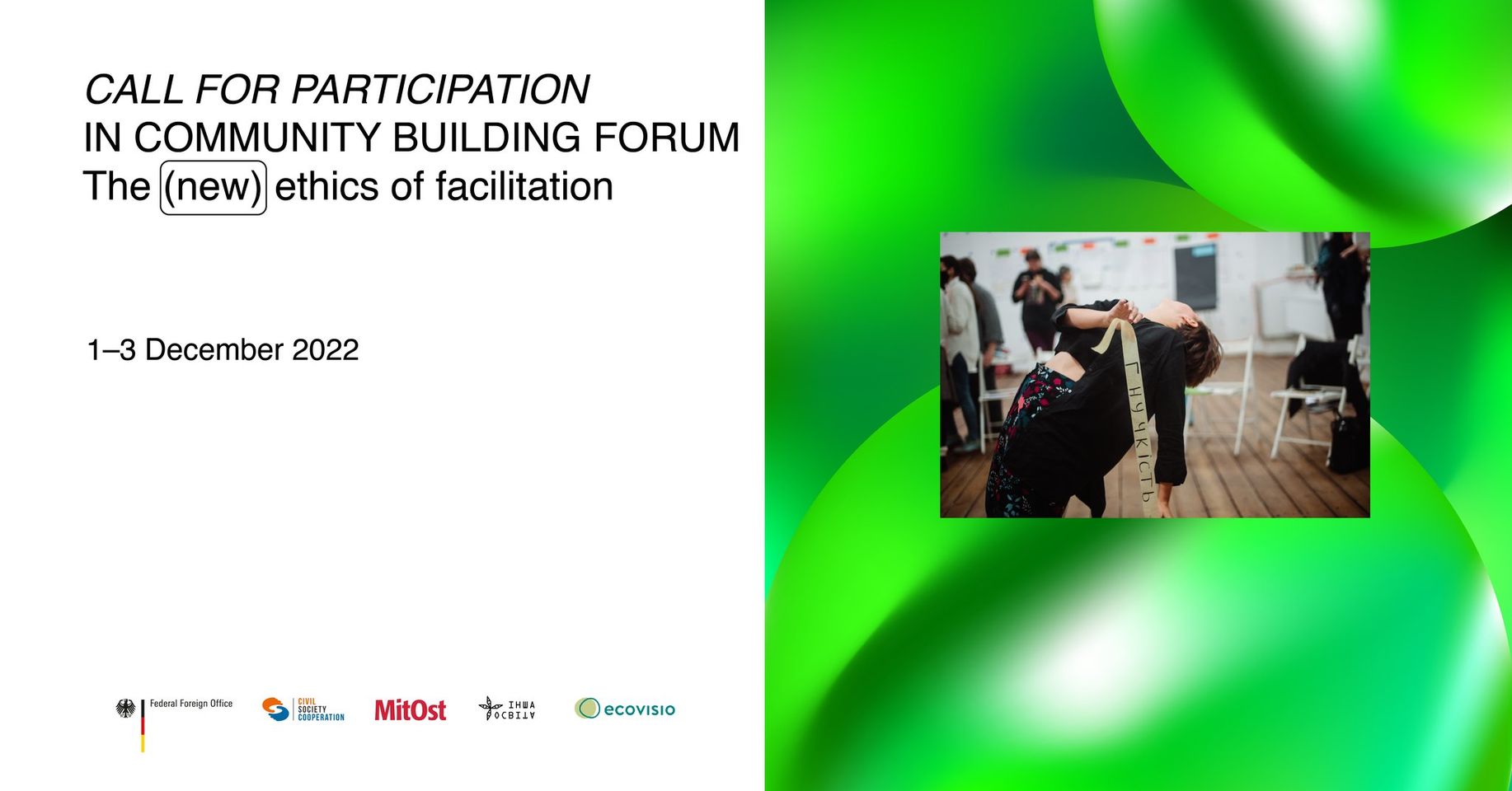
Rethink citizenship education/ Forum The (new) ethics of facilitation
Funding: MitOst (with financial support from the German Ministry of Foreign Affairs)
Partners: MitOst and EcoVisio
Duration: September — December 2022
Budget: 10,225 EUR
Project management: Yulia Sinkevich and Roman Dima
Contact: office@insha-osvita.org
The Rethink citizenship education in digital times project aims to analyze the global changes that the world and society have undergone over the past three years. We analyze the impact of the pandemic that almost completely shut down the world, the beginning of the full-scale invasion of Ukraine, which threatened the security situation throughout Europe. The trauma caused to humanity by these events has affected interpersonal interaction, which is the main guarantee of the facilitation process. The task of the project «Rethink citizenship education in digital times» was to understand these consequences and implement the approaches and knowledge gained from their analysis.
On December 1—3, Otherwise Educated, together with MitOst (Germany) and EcoVisio (Moldova), held an online forum «The (new) ethics of facilitation» as part of this project, an opportunity for educators and youth workers.
Questions and topics raised at the forum:
- How does civic education awareness help to shape and adapt new principles of group learning?
- Is facilitation even needed now?
- How to define the role of facilitators after all that has happened over the years?
- Is it ethical to remain neutral during facilitation?
- Does the lack of neutrality mean a refusal to compromise?
- Why is it a bad idea to consider dialog as a universal method in today’s realities?
- How to work if trauma and stress have become our constant companions?
- How can facilitators restore internal resources to find resilience in today’s environment?
The forum was attended by 44 people, including teachers, trainers, youth workers, and animators from partner countries and other Eastern European countries.
Facilitators and speakers of the forum:
- Natalia Trambovetska is a co-founder of the All-Ukrainian NGO Insha Osvita, engaged in non-formal civic education and community development.
- Bětka Wójcik has a degree in pedagogy and has been working as a teacher and facilitator since 2010.
- Rebekka Pfennig is a cultural scientist and facilitator. She organizes and conducts seminars for international exchange students and works in the field of non-formal education.
- Christa Cocciole is a Berlin-based systems therapist and consultant at Embodied Leadership. Her work supports organizations and communities in strengthening their resilience and systemic social impact.
- Maria Tymoshchuk is a facilitator at the NGO Insha Osvita and part of the international network Theodor-Heuss-Kolleg.
- Jolanta Steciuk is a trainer of international projects on civic education, dialogue, and modern history.
- Anna Valensa – Doctor of Philosophy at Taras Shevchenko National University of Kyiv, has about 20 years of professional experience in psychotherapeutic, educational, coaching and training methods, is a
Questions and topics raised at the forum:
- How does civic education awareness help to shape and adapt new principles of group learning?
- Is facilitation even needed now?
- How to define the role of facilitators after all that has happened over the years?
- Is it ethical to remain neutral during facilitation?
- Does the lack of neutrality mean a refusal to compromise?
- Why is it a bad idea to consider dialog as a universal method in today’s realities?
- How to work if trauma and stress have become our constant companions?
- How can facilitators restore internal resources to find resilience in today’s environment?
«The (new) ethics of facilitation»:
- Brought together Ukrainian and foreign educators, facilitators and other professionals working with youth.
- Participants explored current trends and developed their knowledge of civic education through the analysis of the information received at the forum.
- Identified new methods of work in the context of global changes in recent years and discussed new and effective approaches to facilitation.
Program of the event:
Agenda_Community Building Forum The (New) Ethics of Facilitation.pdf

